



RIP kinase
Receptor-interacting protein kinases; RIPK
Receptor-interacting protein (RIP) kinases are a group of threonine/serine protein kinases with a relatively conserved kinase domain but distinct non-kinase regions. There are seven members of the RIPK family, RIPK1-7, some of which have emerged as critical effectors of immunity to infection with a diverse array of bacterial, viral, and protozoal pathogens.
RIP kinases are cellular signaling molecules that are critical for homeostatic signaling in both communicable and non-communicable disease processes. RIPK1, RIPK2, RIPK3 and RIPK7 have emerged as key mediators of intracellular signal transduction including inflammation, autophagy and programmed cell death, and are thus essential for the early control of many diverse pathogenic organisms.
RIP kinase Isoform Specific Products
All Product Categories
-
RIP kinase Inhibitors
(180)
View all products
-
RIP kinase Activators
(10)
View all products
-
RIP kinase Modulator
(1)
View all products
-
RIP kinase Degraders
(5)
View all products
-
RIP kinase Controls
(2)
View all products
-
RIP kinase Ligands
(4)
View all products
-
Receptor-interacting Serine/Threonine-protein Kinase 3 (RIPK3) Proteins
(3)
View all products
-
RIP kinase Related Products (210)
Related Products (210)

-
Recombinant Proteins (3)
-
Antibodies (2)
-
RIP kinase Isoform Comparison
-
AZ'320
 0 ImagesCat. No.: HY-174820AZ'320 is an ATP-competitive necroptosis (EC50 of 4.9 μM) inhibitor and a RIPK1 (pKD of 5.45) inhibitor. AZ'320 inhibits necroptosis by inhibiting RIPK1 phosphorylation. AZ’320 prevents mortality of the mice and rescues temperature and body weight in SIRS mice models. AZ'320 can be used for researches of cancer and inflammation.
-
WJH-C19
 0 ImagesCat. No.: HY-181596Purity: 98.65%WJH-C19 is an orally active RIPK1 inhibitor with an IC50 of 5.7 nM. WJH-C19 inhibits the RIPK1/RIPK3/MLKL signaling axis, blocks RIPK1 phosphorylation, suppresses the phosphorylation of downstream RIPK3 and MLKL, disrupts necrosome formation, and exhibits protective effects against necroptosis (Apoptosis) in multiple cell lines. WJH-C19 ameliorates symptoms of inflammatory bowel disease in a mouse colitis model by regulating the necroptosis pathway. WJH-C19 alleviates inflammation and bone destruction in a mouse model of rheumatoid arthritis. WJH-C19 is applicable to research related to inflammatory bowel disease and rheumatoid arthritis.
-
RIPK1-IN-15
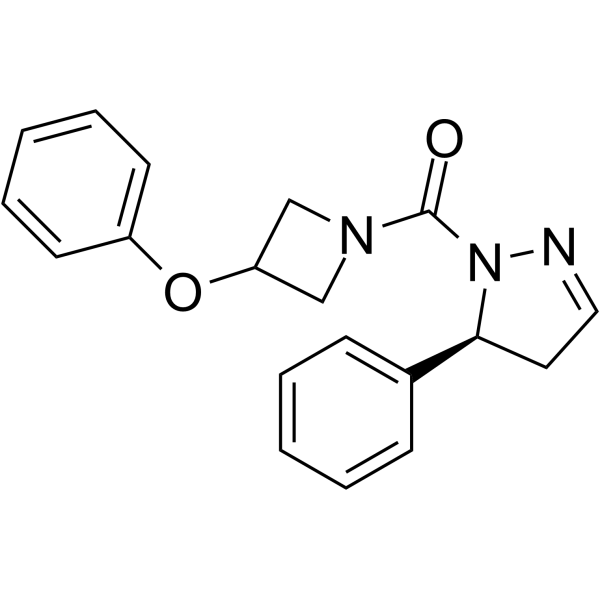 0 ImagesCat. No.: HY-143480CAS No.: 2755704-34-6RIPK1-IN-15 (Compound 2.5) is a potent inhibitor of RIPK1. RIPK1-IN-15 has the potential for the research neurodegenerative, autoimmune, and inflammatory diseases.
-
RIPK1-IN-29
 0 ImagesCat. No.: HY-170232RIPK1-IN-29 (Compound 22) is a RIPK1 inhibitor, with an IC50 of 6.9 nM. RIPK1-IN-29 exerts anti-necroptotic (Apoptosis) activity by inhibiting RIPK1. In a TNF-α-induced in vivo inflammation model, at a dose of 10 mg/kg, RIPK1-IN-29 can protect mice from hypothermia and death. RIPK1-IN-29 can be applied to the research field of inflammatory diseases.
-
PROTAC RIPK2 Degrader-1
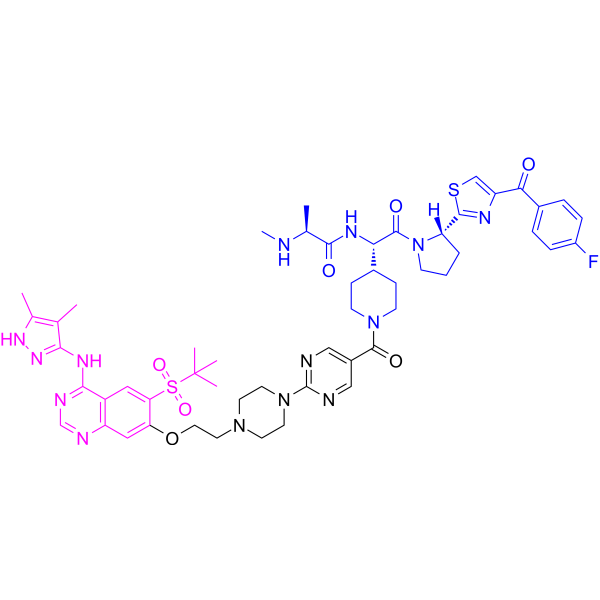 0 ImagesCat. No.: HY-147235CAS No.: 2143956-20-9RIPK2-IN-2 (example 25) is a RIP2 kinase PROTAC inhibitor. RIPK2-IN-2 can block RIP2-dependent proinflammatory signaling, regulated RIP2 kinase activity in auto inflammatory diseases.

-
RIPK1-IN-18 sulfate hydrate
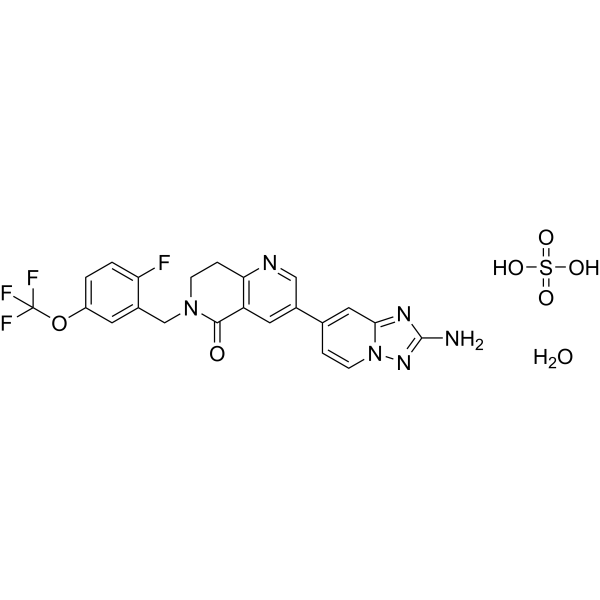 0 ImagesCat. No.: HY-160216ACAS No.: 2897618-64-1RIPK1-IN-18 sulfate hydrate is a potent RIPK1 inhibitor that can be used in autoimmune diseases research (NZ748385A; compound i).

-
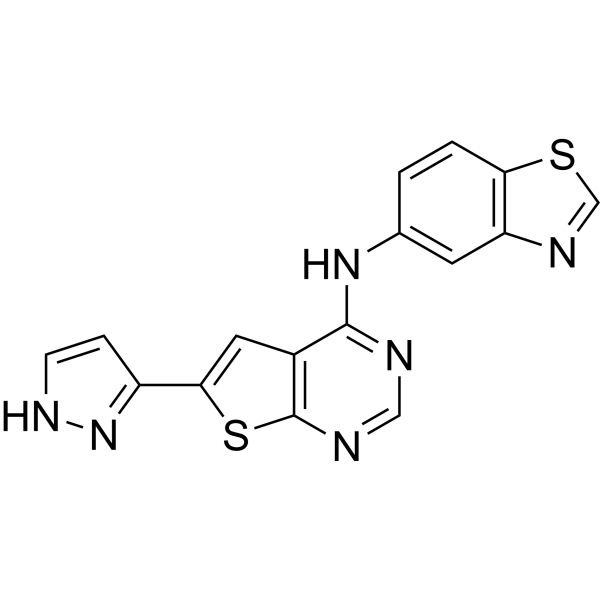
Anticancer agent 284
 0 ImagesCat. No.: HY-178937Anticancer agent 284 exhibits cytotoxicity against osteosarcoma cell line (Hos), non-small cell lung cancer cell line (A549), and colon cancer cell line (HCT-116). Anticancer agent 284 can impact the pRIPK3 kinase concentration in the A549 (2.97 pg/mL). Anticancer agent 284 can be used for the study of cancer.
-
RIPK1-IN-23
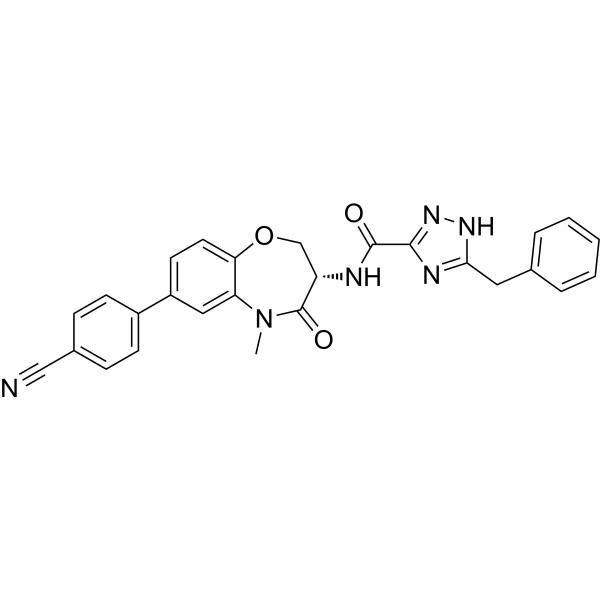 0 ImagesCat. No.: HY-157963CAS No.: 3031534-16-1RIPK1-IN-23 (compound 19) is a RIPK1 inhibitor with potent anti-necroptotic effects in HT-29 cells (EC50 of 1.7 nM). RIPK1-IN-23 shows anti-inflammatory activities.
-
RIPK1-IN-26
 0 ImagesCat. No.: HY-162928CAS No.: 2252271-96-6RIPK1-IN-26 (Compound 8a) is a potent receptor-interacting serine/threonine-protein kinase 1 (RIPK1) inhibitor with cell anti-necroptosis potency. RIPK1-IN-26 demonstrats good metabolic stability and good binding specificity in mice. RIPK1-IN-26 is promising for research of PET imaging probe development and neurodegenerative disorders.
-
Sibiriline
 0 ImagesCat. No.: HY-120600CAS No.: 1346526-26-8Sibiriline is a specific competitive inhibitor of RIPK1 that targets the RIPK1 ATP-binding site and locks it in an inactive conformation. Sibiriline inhibits TNF-induced RIPK1-dependent necroptosis and RIPK1-dependent apoptosis, but does not protect cells from caspase-dependent apoptosis. Sibiriline protects mice from concanavalin A-induced hepatitis and has the potential to inhibit immune-dependent hepatitis..
-
Necroptosis-IN-4
 0 ImagesCat. No.: HY-161843Necroptosis-IN-4, a potent necroptosis inhibitor, is a RIP kinase 1 (RIPK1) inhibitor. Necroptosis-IN-4 has no inhibitory activity against RIPK3 and weak inhibitory activity against VEGFR1/2 and PDGFR-α.
-
TP-030-1
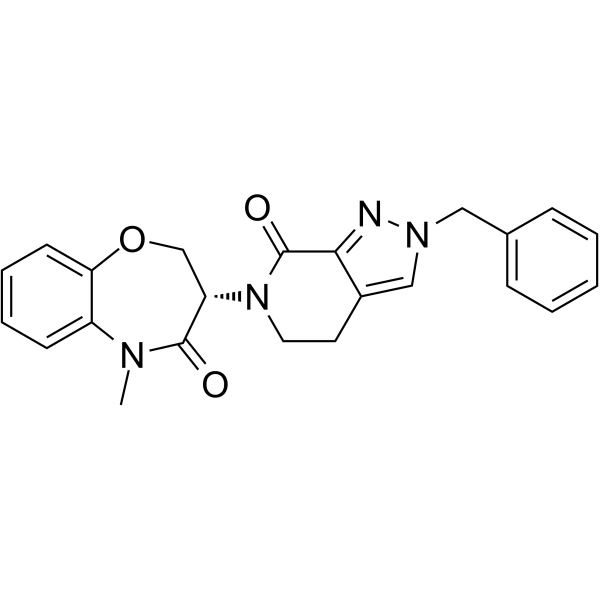 0 ImagesCat. No.: HY-148253CAS No.: 2095514-75-1TP-030-1, a chemical probe, is an inhibitor of RIPK1. TP-030-1 inhibits hRIPK1 with a Ki value of 3.9 nM and inhibits mRIPK1 with an IC50 value of 4.2 μM. TP-030-1 can be used for the research of inflammatory diseases and neurodegenerative diseases.
-
RIPK2-IN-7
 0 ImagesCat. No.: HY-171592CAS No.: 2789711-40-4RIPK2-IN-7 (Compound 10w) is an orally active, selective RIPK2 inhibitor (IC50: 0.6 nM). RIPK2-IN-7 inhibits RIPK2 kinase activity, blocks the nucleotide-binding oligomerization domain (NOD) signaling pathway, and reduces the production of inflammatory factors (such as TNFα). RIPK2-IN-7 can be used in the study of inflammatory bowel disease (IBD).
-
Nec-3a
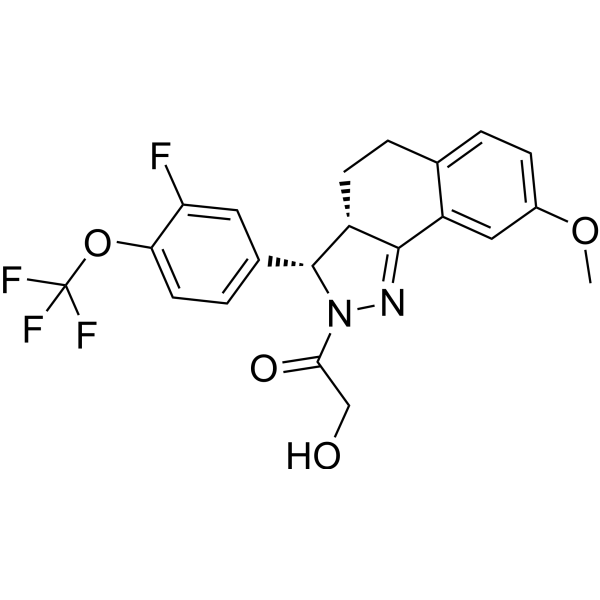 0 ImagesCat. No.: HY-18899CAS No.: 1504558-72-8Nec-3a is a Necrostatin-3 analogue. Nec-3a is a RIP1 inhibitor (IC50: 0.44 μM). Nec-3a inhibits the autophosphorylation activity of the RIP1 kinase domain.
-
RIPK2-IN-6
 0 ImagesCat. No.: HY-168567CAS No.: 2242432-02-4RIPK2-IN-6 (Compound 15a) is an inhibitor for RIPK, that inhibits the phosphorylation of RIPK2, and thus inhibits the NF-κB and MAPK signaling pathways. RIPK2-IN-6 exhibits anti-inflammatory and anti-fibrotic activities in Dextran sodium sulfate (HY-116282C)-induced mice colitis models.
-
Anticancer agent 267
 0 ImagesCat. No.: HY-173075Anticancer agent 267 (Compound 5q) is the activator for RIPK3 and MLKL. Anticancer agent 267 inhibits the proliferation in a variety of cancer cell lines (IC50 for MDA-MB-231, MDA-MB-486 and MCF-7 is 9.79, 10.77 and 5.94 μM, respectively), arrests cell cycle at subG1 phase, and induces necroptosis in cell MDA-MB-231. Anticancer agent 267 exhibits antitumor activity in mouse xenograft models.
-
RIP1 kinase inhibitor 4
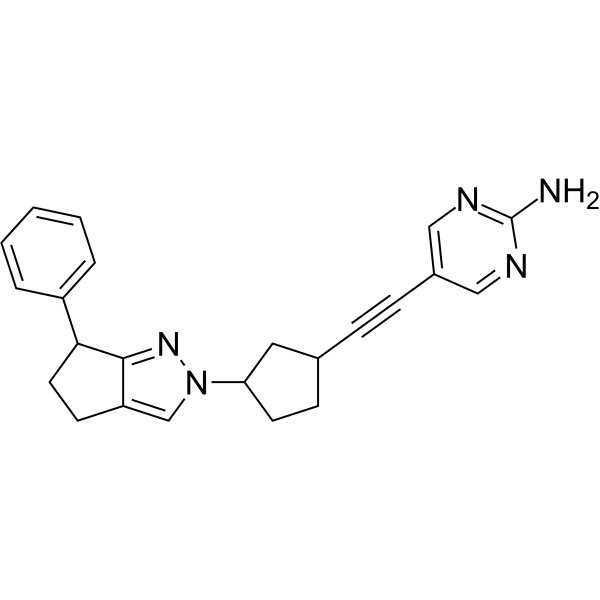 0 ImagesCat. No.: HY-153434CAS No.: 2919836-00-1RIP1 kinase inhibitor 4 (Example 3) is a BBB-penetrable RIP1 kinase inhibitor (EC50: <100 nM). RIP1 kinase inhibitor 4 can be used for the research of cell programming necrosis-related diseases. RIP1 kinase inhibitor 4 is a click chemistry reagent, it contains an Alkyne group and can undergo copper-catalyzed azide-alkyne cycloaddition (CuAAc) with molecules containing Azide groups.




